Organizers, Partners and Sponsors
Organizer

Platinum Sponsor

Gold Sponsors

Silver Sponsors

Bronze Sponsors



Agentic AI marks a decisive shift in artificial intelligence. These systems do not merely predict or generate content - they set goals, plan multi-step actions, interact with tools, and adapt to feedback. They act. As autonomy increases, so does a central question for computer science: what does trust mean when systems begin to make decisions?
This keynote examines the technical foundations of agentic AI - planning architectures, memory integration, tool orchestration, and feedback loops - and explores how these components shape system behaviour in real-world environments. But technical capability alone does not create trust. Trust emerges from transparency, robustness, controllability, and clear accountability structures.
At a time when agentic systems are moving into domains such as industry automation and critical infrastructure, the responsibility cannot be delegated to algorithms. Designing trustworthy agentic AI means designing systems whose objectives, constraints, and failure modes are understood - and whose ultimate accountability remains human.
The future of AI will not be defined by how autonomous our systems become, but by how deliberately we embed responsibility into their architecture.
Dr. Kirsten MF Weber
Scientist, Research Center Jülich
Kirsten Weber is a physicist working at the intersection of machine learning, high-performance computing, and climate science. As Project Manager at the Jülich Supercomputing Centre (JSC) and Science Coordinator for the Centre for Earth System Observations and Computational Analysis (CESOC), she leads international research consortia that develop AI-driven tools for global and high-resolution climate forecasting, including extreme weather events (e.g., the WeatherGenerator). Her work leverages large-scale models and diverse datasets to improve predictions and decision-making in critical areas like precipitation, floods, and energy management. She also serves on scientific panels for the World Climate Research Programme, and reviews one of the annual global climate reports, ensuring scientific evidence informs policy.
Kirsten holds a PhD in atmospheric physics and dynamics from the University of Sheffield, where she studied drying signals in the atmosphere and trained at the Grantham Centre for Sustainable Futures. Her earlier research integrated anthropogenic impacts such as irrigation and urbanisation into the European Centre for Medium-Range Weather Forecasts (ECMWF) and spanned interdisciplinary projects from ocean acoustics to ecosystem monitoring.
She is particularly interested in agentic AI: understanding how decisions are made, what data is needed, and how machines could emulate or support human decision-making in high-stakes contexts like climate and weather.
Dr. Alexander Ebbes
CTO, Xyna.AI
Alexander has been in deep love with machine learning since the days when this was not yet "deep". Besides the inevitable neural networks that have come back into fashion, he enjoys exploring the whole spectrum from genetic algorithms to symbolic intelligence. Alexander's interests range from the mathematical foundations of AI and machine learning to algorithms, hardware and real-world scenarios with practical benefits. His main area of application for AI is telecommunication networks. There are a variety of applications such as topology optimisation, segment routing, performance prediction, and energy savings that benefit from advanced analytics.
Alexander holds a PhD in physics, with a thesis on model building and parallel computing from the University of Mainz. Alexander holds a couple of granted patents, which bridges innovative spirit and professionalism. In his main job he is CTO for Xyna Factory, an open-source platform for telco network automation. Xyna.AI is a rather new startup within the Xyna family of products, building a community for souverain AI researchers and practitioners that want to focus on the essentials.
Besides his professional targets Alexander has a strong commitment to sharing knowledge and insights. This is evident in his regular contributions to conferences and LinkedIn, where he engages a wide audience with thought-provoking content on networking and AI. Additionally, he is deeply invested in the cultivation of future talent. In the German Physical Society's (DPG) mentoring program, he likes to guide aspiring young professionals towards fulfilling careers in the industry. Alexander's passion for organising hackathons shows his belief that it is important to be a maker and not just a user.
In an era where digital threats are evolving faster than ever, ensuring the security and autonomy of our communication infrastructure is not just a technical challenge—it's a strategic imperative. At Qonduit, we are building the foundational infrastructure for today's encrypted communication, designed to remain secure even against tomorrow's threats. Our all-in-one solution for Quantum Key Distribution Networks (QKDN) empowers organizations to take control of their data and communication channels, reducing reliance on external providers and mitigating risks posed by geopolitical and technological dependencies. Digital sovereignty is more than a buzzword; it's about retaining the ability to act autonomously in the digital world, safeguarding data, and ensuring long-term resilience. Qonduit's approach—rooted in cutting-edge hardware and software—enables businesses and public institutions to achieve just that. By providing a fast track to research, development, and deployment of quantum-safe communication, we help our partners future-proof their infrastructure and assert their digital independence.
In this talk, we'll explore how Qonduit's innovations align with Europe's push for digital sovereignty, the importance of quantum-safe technologies in today's landscape, and how our solutions are shaping a more secure and self-determined digital future.
Neil-Jocelyn Schark is the Co-Founder and Managing Director of qonduit GmbH, a startup developing scalable, independent, and trustworthy Key Management Systems (KMS) and Controllers for Quantum Key Distribution Networks (QKDN) to enhance European digital sovereignty and data security. Prior to this role, he served as a scientific researcher at Hochschule Darmstadt for the DemoQuanDT project, where he contributed to the construction of Germany's longest QKDN, spanning 900km of active fiber between Bonn and Berlin.
Observability has always been the heartbeat of stable networks, but for too long, we have relied on the slow, pull-based legacy of SNMP. As networks grow more complex, we need more than just faster metrics—we need a fundamentally different way to manage them. In this talk, we explore the transition from passive polling to Cloud Native Network Observability. We will demonstrate how replacing SNMP with gNMI streaming telemetry allows us to move from lagging indicators to real-time awareness. But the true revolution lies in the workflow: by leveraging Kubernetes Operators and Custom Resource Definitions (CRDs), we can manage network monitoring exactly like we manage cloud applications—declaratively, efficiently, and as code.
Join us to see how combining the precision of gNMI with the power of Kubernetes creates a self-driving observability stack that is scalable, resilient, and truly modern.
Florian Löhden is a DevOps Engineer at Logicalis Connected with roots in Software Engineering. Passionate about applying code to infrastructure, he specializes in Network Automation and is a co-founder of the NetAuto Group.
Network automation is often discussed in the context of production environments, yet lab and test networks are still commonly built and configured manually. This talk presents a fully automated network workflow on GNS3 using Terraform and Ansible. Terraform is used to declaratively define network topologies, devices, and links in GNS3, enabling repeatable and version-controlled lab deployments. At first boot, devices are automatically initialized using ZTP for Day-0 configuration. Ansible then applies standardized Day-1 and Day-2 configuration, allowing consistent provisioning across rebuilds and topology changes. Arista EOS routers are used as the reference platform, but the automation patterns discussed are broadly applicable.
The session focuses on practical automation design, lifecycle management, and lessons learned while building an open-source workflow that treats network labs as Infrastructure-as-Code.
Uzma Saman Chanderki, NetDevOps engineer at Logicalis Connected GmbH.
Welche Fähigkeiten heutiger KI passen zu Anwendungsfällen in der Security? Was sind die Chancen und Risiken beim Einsatz KI-basierter Systeme und Assistenten? Wir machen einen kleinen Rundflug über Anwendungsfälle und verfügbare Technologien und gehen auf die Risiken ein, die durch deren Einsatz entstehen können.
Danijel Milicevic wurde mit 16 gehackt und entschied sich für eine Karriere in der IT-Sicherheit, um Vergeltung zu üben. Den Typen, der ihm einen Trojaner unterschob, hat er bis heute nicht gefunden.
Karsten Rohrbach praktiziert IT und -Security seit >30 Jahren, beim Internetprovider, im Beratungshaus, im Massenzahlungsverkehr und seit 6 Jahren bei der Bahn. Hat keine Angst vor grünem Text auf schwarzem Hintergrund.
About 13 million base stations worldwide are the workhorse of mobile networks. Traditionally, these stations were tightly integrated hardware-software systems built by a few specialized vendors, such as Ericsson, Nokia, and Huawei. This is changing! In recent years, a global community has transformed the traditional base station design into software radio stacks that run on commodity computers. While some of these projects are commercial, there is also a growing number of important open-source stacks, such as OpenAirInterface, srsRAN, and OCUDU by the Linux Foundation that prepare for the deployment of the 6th generation of mobile networks (6G) in 2030. In this talk, we will introduce this technological paradigm shift and systematically discuss its technical challenges. Based on real lab and field experience, we will show what works at the moment, what is currently being built, and what is still missing for carrier grade performance in public 6G networks.
Stefan Valentin is Professor of Mobile Networks in the Department of Computer Science at Darmstadt University of Applied Sciences. There, he is head of the 6G Laboratory and a leading member of the Network Technologies research group. His algorithms are implemented in mobile networks worldwide and have been registered in more than 30 patents. His publications have been cited more than 3,000 times and have received multiple awards. He is a member of the IEEE Communications Society, the Applied Computer Science Doctoral Centre, and co-founder and CTO of Open Radio Systems GmbH.
Die Informations- und Kommunikationstechnologien (IKT) sind von zentraler gesellschaftlicher und wirtschaftlicher Bedeutung in Hessen, Deutschland und Europa. Allerdings werden nahezu alle wichtigen Technologien dazu außerhalb von Europa entwickelt und gefertigt, so dass Europa sich in einer großen technologische Abhängigkeit befindet.
Unter dem Schlagwort digitale Souveränität wird seit einigen Jahren versucht diese Abhängigkeit zu verringern. Dabei ist das Problem grundlegender: Um digitale Souveränität zu erreichen, müssen in Europa zunächst selbstständig IKT-Technologien entwickelt, umgesetzt und beherrscht werden. Diese technologische Souveränität — vom Chip bis zur Software — ist die Voraussetzung für ein selbstbestimmtes, proaktives und sicheres Agieren in der digitalen Welt.
Trotz mehrjähriger Bemühungen ist die technologische Souveränität noch immer nicht weiter fortgeschritten. Tatsächlich führen aktuelle Programme, wie z.B. das “Cloud Sovereignty Framework” der Europäischen Kommission, noch tiefer in die Abhängigkeit von nichteuropäischen Anbietern. Dieser Widerspruch ist an der Oberfläche des “Digitalen” nicht auflösbar!
Dieses Problem und Lösungsansätze sollen im Panel aus unterschiedlichen Blickwinkeln betrachtet werden:
Das Panel bietet eine Möglichkeit für den Austausch zwischen Forschung, Industrie und Politik und zeigt auf, wie Hessen, Deutschland und Europa ihre Souveränität stärken können – von der Entwicklung eigener Technologien bis hin zur Gestaltung von Partnerschaften.
Dr. Walter Fischedick ist Ministerialdirigent und Leiter der Abteilung Digitalisierung, Wirtschaft, Innovation Hessische Staatskanzlei. Nach Studium der Rechtswissenschaften und Theologie und dem Berufseinstieg als selbstständiger Rechtsanwalt arbeitete er als Justitiar in der Verbindungsstelle der katholischen Diözesen zum Land Hessen. Danach wechselte er als Referent für Innenpolitik, Grundsatzfragen und Datenschutz in den Hessischen Landtag und im Anschluss als Referatsleiter in die Rechtsabteilung sowie Informationsabteilung der Hessischen Staatskanzlei. Dort übernahm er dann die Büroleitung der Hessischen Ministerin für Digitale Strategie und Entwicklung und leitet seit Herbst 2021 die dortige Abteilung Digitalisierung, Wirtschaft und Innovation. Die Schwerpunkte der Abteilung liegen auf dem Breitband- und Mobilfunkausbau in Hessen, der Unterstützung digitaler Innovationen durch das Landesförderprogramm Distr@l sowie die Unterstützung der hessischen Wirtschaft und Fachkräfte im Bereich Digitalisierung.
Christian Freund ist CEO der Open Radio Systems GmbH, einem führenden Anbieter von Open RAN-Lösungen für die Telekommunikationsbranche. Mit über 20 Jahren Erfahrung in der Telekommunikationsindustrie hat Christian Freund eine beeindruckende Karriere vorzuweisen, die von der Entwicklung innovativer Technologien bis hin zur Führung erfolgreicher Unternehmen reicht. Unter seiner Leitung hat Open Radio Systems bedeutende Fortschritte im Bereich der offenen Funkzugangsnetze erzielt und sich als wichtiger Akteur in der globalen Telekommunikationslandschaft etabliert. Freunds Vision für die Zukunft der Telekommunikation konzentriert sich auf die Förderung von Innovation, Interoperabilität und Nachhaltigkeit in der Branche.
Thomas Klein ist COO der Pan Dacom Networking AG, einem führenden Anbieter von Netzwerk- und IT-Lösungen. Mit über 25 Jahren Erfahrung in der IT-Branche führt seine Karriere von der Entwicklung innovativer Technologien bis hin zur Führung erfolgreicher Unternehmen reicht. Unter seiner Leitung hat Pan Dacom bedeutende Fortschritte im Bereich der Netzwerktechnologie erzielt und sich als wichtiger Akteur in der globalen IT-Landschaft etabliert. Kleins Vision für die Zukunft der IT konzentriert sich auf die Förderung von Innovation, Interoperabilität und Nachhaltigkeit in der Branche.
Prof. Dr. Martin Stiemerling ist Professor für Mobile Netzwerke an der Hochschule Darmstadt, wo er auch Vorsitzender des Prüfungsausschusses und Sprecher der Telekommunikationsgruppe ist. Seine Forschung hat sich hauptsächlich auf die Indoor-Lokalisierung und Ressourcenallokation in Mobilfunknetzen konzentriert. Stiemerlings Algorithmen sind weltweit in Mobilfunknetzen im Einsatz, und mehr als 30 Patentanmeldungen wurden für sie eingereicht. Seine Forschungsarbeiten haben verschiedene Auszeichnungen erhalten. Stiemerling ist Mitglied der IEEE, Gründer des Steinbeis-Zentrums für drahtlose Technologien und Mitbegründer des Startups Qonduit.
Municipal administrations manage vast, heterogeneous document landscapes: council minutes, regulatory texts, procurement records, planning documents, citizen inquiries, and interdepartmental communications. While large language models (LLMs) offer powerful natural language interfaces to this knowledge, naïve deployments fail to meet public-sector requirements for factual reliability, auditability, data protection, and domain specificity.
This talk presents a Retrieval-Augmented Generation (RAG) approach in municipal contexts, using SUMMETIX IRIS as a production-grade case study. We outline how IRIS combines structured and unstructured data ingestion pipelines, semantic indexing, hybrid retrieval (dense + lexical), and controllable generation to enable traceable, context-grounded responses over administrative document collections.
The presentation focuses on architecture and implementation details: document preprocessing and segmentation strategies for long-form policy texts; embedding model selection and evaluation; metadata-aware filtering for jurisdictional and temporal constraints; retrieval optimization; hallucination mitigation through citation grounding; and role-based access control integration with municipal IT infrastructure. We also touch deployment patterns and GDPR-compliant data handling.
Dr Johannes Daxenberger is the founder and managing director of summetix GmbH, where he is responsible for product and strategy development. Previously, he worked as a senior researcher at the Ubiquitous Knowledge Processing (UKP) Lab at TU Darmstadt and is co-author of numerous specialist articles in the fields of text and argument mining.
Der Einsatz von Drohnen in Kombination mit Methoden der Künstlichen Intelligenz eröffnet vielfältige Anwendungsfelder in Forschung und Praxis, stellt die Hochschullehre jedoch vor erhebliche technische, organisatorische und regulatorische Herausforderungen. Im Rahmen eines geteilten Forschungssemesters sowie begleitender Lehrveranstaltungen wurden an der Frankfurt University of Applied Sciences kostengünstige, KI-fähige Drohnenplattformen entwickelt, erprobt und systematisch in die Informatiklehre integriert
.Der Vortrag berichtet über die Konzeption, den Aufbau und den praktischen Einsatz dieser Drohnen in projektorientierten Bachelor- und Masterveranstaltungen. Dabei werden sowohl technische Aspekte wie Hardwareauswahl, Firmware, Sensorik, Energieversorgung und KI-Hardware als auch organisatorische Rahmenbedingungen, Kostenstrukturen und rechtliche Vorgaben beleuchtet. Ein besonderer Fokus liegt auf den Erfahrungen aus zwei aufeinanderfolgenden Semestern, in denen Studierende erstmals intensiv mit selbstgebauten Drohnensystemen gearbeitet haben.
Anhand konkreter Beispiele wird aufgezeigt, welche typischen Schwierigkeiten beim Aufbau und Betrieb auftreten, welche Entscheidungen sich im Lehrbetrieb bewährt haben und welche Anpassungen notwendig waren, um die Technologie nachhaltig in das Curriculum zu integrieren. Ergänzend werden Rückmeldungen der Studierenden diskutiert, die den hohen Praxisbezug und den Kompetenzgewinn bestätigen, zugleich aber auch den hohen Arbeitsaufwand und die steile Lernkurve verdeutlichen.
Der Vortrag richtet sich an Lehrende, Forschende und Hochschulangehörige, die sich für den praxisnahen Einsatz komplexer Technologien in der Informatiklehre interessieren, und gibt konkrete Hinweise, wie KI-Drohnen realistisch, sicher und didaktisch sinnvoll in Studium und Lehre eingesetzt werden können.
Prof. Dr. Christian Baun ist Professor für Informatik an der Frankfurt University of Applied Sciences. Seine Lehr- und Forschungsschwerpunkte liegen in den Bereichen Verteilte Systeme, Cloud Computing, Computernetze, Betriebssysteme sowie im praxisnahen Einsatz komplexer IT-Systeme in Forschung und Lehre. Ein besonderer Fokus seiner aktuellen Arbeiten liegt auf der Integration neuer Technologien wie Künstlicher Intelligenz und autonomer Plattformen in das Informatikstudium. Prof. Baun verfügt über langjährige Erfahrung in der Konzeption und Durchführung projektorientierter Lehrveranstaltungen und ist Autor zahlreicher Fachpublikationen und Lehrbücher in Informatik.
The landscape of satellite communications is undergoing a radical transformation, shifting from isolated "bent-pipe" architectures to highly dynamic, interconnected orbital meshes. As these networks expand, traditional distributed routing protocols—designed for static terrestrial infrastructure—struggle to adapt. The extremely fast topology changes inherent to orbiting bodies introduce massive routing complexity. Furthermore, spacecraft are strictly bound by Size, Weight, and Power (SWaP) constraints, where compute-heavy routing tables drain critical battery life and push the limits of radiation-hardened hardware.
This presentation explores how Software-Defined Networking (SDN) serves as the critical enabler for modern space networks. By decoupling the control plane from the data plane, SDN offloads complex routing computations from resource-constrained satellites to centralized controllers. We will examine how this architecture leverages deterministic orbital mechanics to establish a "Global View," allowing networks to proactively manage rapid topology changes and optimize resource allocation.
We will explore how SDN provides the flexibility to address diverse operational environments—from managing intermittent links in sparse, high-latency networks to executing dynamic traffic engineering across dense LEO mega-constellations.
Finally, the discussion will highlight the strategic and geopolitical importance of intelligent orbital infrastructure. We will look at how Aperio Space Technologies enhances European Technological Sovereignty through its dedicated SDN-Controller for Space Networks, ensuring secure, resilient, and independent control over critical dual-use satellite constellations.
Valentin Henkys acts as the Technical Director at Aperio Space Technologies, overseeing all technical operations and the core development of their SDN controller for Non-Terrestrial Networks. In this role, they are responsible for translating complex non-terrestrial networking challenges into resilient, software-driven infrastructure.
Providing developers and students with the freedom to experiment in the cloud often clashes with the need for governance, security, and cost control. The AWS Innovation Sandbox addresses this challenge by enabling organizations to offer self-service, temporary AWS environments while maintaining centralized oversight.
In this talk, we explore how the Innovation Sandbox solution automates the provisioning and lifecycle management of sandbox accounts using AWS Organizations, Service Control Policies (SCPs), budget controls, and automated account recycling. Participants will learn how cloud administrators can drastically reduce operational overhead while giving teams the freedom to safely explore AWS services, prototype ideas, and build new skills.
By combining strong guardrails with automation and self-service capabilities, the AWS Innovation Sandbox transforms experimentation into a scalable, governed innovation platform - empowering organizations and universities to accelerate learning, foster creativity, and turn ideas into production-ready solutions.
Prof. Dr. Michael von Rüden is a Professor of Distributed Systems at the Department of Computer Science at Darmstadt University of Applied Sciences (h_da) in Germany. His teaching and research focus on distributed systems, high-performance cloud computing, automation, DevOps, and site reliability engineering. He is also interested in areas such as software-defined networking, wireless networks, and the Internet of Things.
Klassische Suchsysteme liefern in großen Wissensbeständen oft unpräzise Ergebnisse. Gleichzeitig bieten LLMs eine natürliche Interaktion, bergen jedoch Risiken wie Halluzinationen und unklare Quellen, besonders kritisch im regulierten Bankenumfeld.
In diesem Vortrag stellen wir unsere KI gestützte Suche im Sparkassen Investment Manager (SIM) vor. Sie basiert auf einem RAG (Retrieval Augmented Generation) Ansatz. Relevante Chunks werden aus einer Vektordatenbank abgerufen und zusammen mit einer Systemprompt an ein LLM gegeben, welches die Antwort ausschließlich auf diesen Informationen generiert.
Der Vortrag gibt einen Einblick in das Zusammenspiel zwischen klassischer und KI-Suche.
Lars Semmler und Michael Helsper sind Anwendungsentwickler bei der DekaBank. Seit einigen Jahren arbeiten sie im Projekt Sparkassen Invest Manager (SIM). Neben der Entwicklung neuer Funktionalitäten wie beispielsweise KI-Suche, Messaging-Diensten oder Benutzerverwaltung beschäftigen sie sich auch mit Querschnittsthemen wie der Betreuung der Nutzerauthentifizierung und der Pflege des Designsystems.
This presentation explores how broadband networks can be transformed through software‑driven architectures, unified data models, and AI‑ready automation frameworks. By consolidating legacy management layers and leveraging digital twins, knowledge graphs, and AI/ML‑based agents, operators gain deeper insights, faster troubleshooting, root cause analysis and the foundation for intent‑driven, closed‑loop operations. The session outlines practical steps for adopting these capabilities and accelerating the path toward autonomous broadband networks.
Robert serves as Product Manager for Radisys’ SDN-driven Connect Modular Broadband Solution. Before joining Radisys, Robert led the Access 4.0 program at Deutsche Telekom. Prior to heading the Access 4.0 program, Robert held multiple management positions within Deutsche Telekom, including responsibility for Design-to-Cost, a discipline which strives to create full cost transparency and manage supplier relationships accordingly. Robert began his career at Roland Berger, a leading European management consultancy. He graduated from Karlsruhe University.
Steffen Krippner ist Abteilungsleiter im Network Engineering bei Vodafone. Sein Team entwickelt die Management- Systeme für Kundenaufträge und Kundenendgeräte in Deutschland, Großbritannien, Portugal, Rumänien, Tschechien, Albanien und Italien im Festnetzbereich (Fibre, Cable, DSL).
For a global community of contributors to function effectively, it is essential that community values and processes are managed consistently and actively. The KDE Linux desktop was founded 30 years ago in Tübingen, Germany. It has since grown to become one of the world's largest open source communities. Throughout its development, governance has encompassed various elements, including a governance body, decision processes, license management and community rules.
In this talk, we will delve into the project's history and significant milestones, highlighting key contributions and changes. We will review a period when the project's governance almost came to a halt nd examine how an environment conducive to renewal and growth was established.
Drawing on these insights, we turn to the question of how smaller communities can be established. In addition, we address the distinction between publishing source code and operating a community.
Prof.Dr. Eva Brucherseifer is Professor of Intelligent Systems in the Department of Computer Science at Darmstadt University of Applied Sciences (h_da) in Germany. From 2004 to 2007, she served as resident of KDE e.V., the project's governing body. She founded and successfully ran a Qt consulting company specialising in embedded touch systems for 15 years. In addition to her today's teaching role, she provides support to start-ups as a business angel.
„Everything as Code” zeigt, wie die Kombination aus Clean Code, Documentation as Code, GitOps und DevOps dazu beiträgt, das Data Center der DFS verständlich, zuverlässig und effizient zu entwickeln. Wir betrachten nicht nur die Funktionalität im Code, sondern auch alle damit verbundenen Themen: Betrieb, Wartung, Dokumentation, Tests und Zertifizierung sowie die Umsetzung bei einem Shift-Left-Ansatz.
Christian Lölkes arbeitet bei der Deutschen Flugsicherung (DFS) als Site Reliability Engineer am Aufbau einer neuen Cloud-Infrastruktur für Flugsicherungstechnik. Er hat Elektrotechnik und Informationstechnik am Karlsruher Institut für Technologie (KIT) studiert und begeistert sich in seiner Freizeit für Medienkunst sowie für die Idee, dass Programmieren eine kreative Aufgabe ist und Programmierer somit auch Künstler sind..
In diesem Vortrag stellt Gründer und Gründungsberater Bennet Siller vor, wie er selbst aus dem Studium heraus ein Start-up aufgebaut hat. Außerdem erfahrt ihr, welche Unterstützung Studierende der Hochschule Darmstadt bei der Gründung eines Unternehmens bekommen. Neben einem starken Netzwerk, Startup-Skills und Expertenwissen gibt es sogar gezielte Finanzierungen und Stipendien!
Bennet Siller gründete 2022 zusammen mit einem Kommilitonen aus dem Masterstudium Umweltingenieurwesen die Circular Innotech GmbH. Das Unternehmen entwickelt und patentiert Lösungen für nachhaltige Verpackungen und lizenziert diese an Kooperationspartner. Seit 2023 unterstützt er die Gründungsförderung der Hochschule Darmstadt durch die Betreuung von Start-ups und Existenzgründungen.
Im Kontext Agentic AI wird oft das Bild des „Solopreneurs“ verwendet, der als einziger Mensch zusammen mit Agenten ein Team bildet. Endlich kann man die ganzen vermeintlich zeitraubenden Scrum-Rituale hinter sich lassen und viel, viel schneller werden. Aber Scrum und seine Rituale waren nie dafür gedacht, schneller zu werden. Agentic AI kann uns aber helfen, dem Ideal des Scrum Guides sogar wieder deutlich näher zu kommen - in Teams.
Konstantin Diener is CTO at cosee. He has been developing software for more than 20 years. His CTO role made him shift his focus to (agile) leadership topics and to Product Management eventually.
Konstantin speaks at conferences and was author of „DevOps Stories“, a column about culture, leadership, agile and DevOps.
This talk provides an overview of the current state of multimodal foundation models. Building on Meta's 2023 contrastive learning-based ImageBind model, several exploratory usage examples of the shared multimodal embedding space are presented. As a representative state-of-the-art large multimodal model, the architecture of Qwen3-Omni is explained in detail. For various video question answering tasks—primarily focusing on inconsistency detection, the performance of Qwen3-Omni is compared with Gemini3, and both quantitative and qualitative results are discussed.
Markus Döhring is a Full Professor of Data Sciences at the University of Applied Sciences Darmstadt, Germany. He teaches courses including Databases, Big Data Analytics, Text and Web Mining, and Neural Network Architectures. Beyond teaching, his work focuses primarily on hands-on industry collaborations, particularly in the application of foundation models for customer email processing. His current research interests include multimodal models for tasks such as video question answering, document processing, and GUI automation.
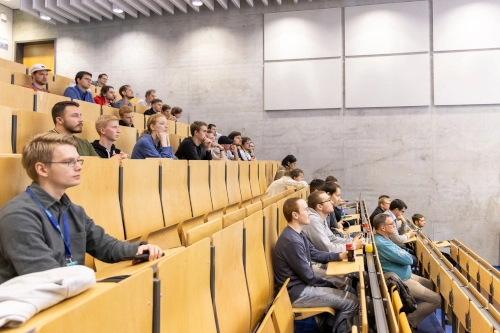
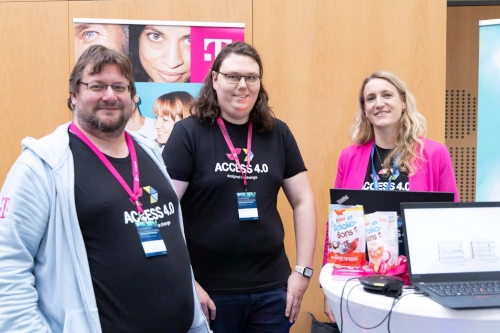
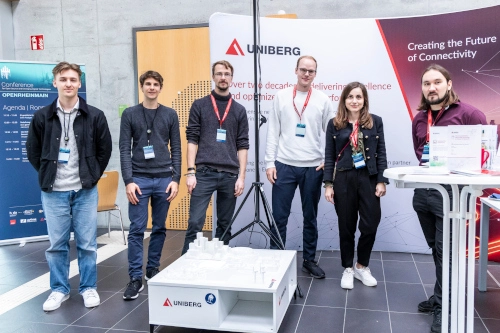
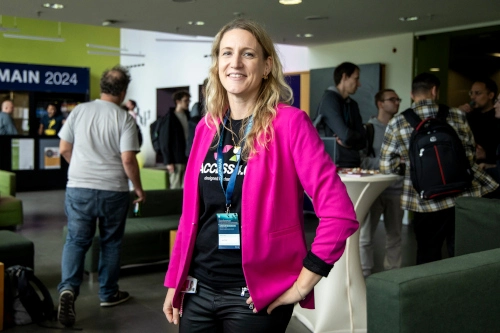
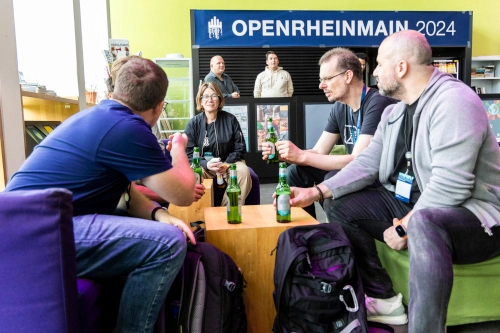
Thanks to all participants, sponsors and speakers who made the OpenRheinMain Conference a great event! We are looking forward to welcoming you again in 2026.
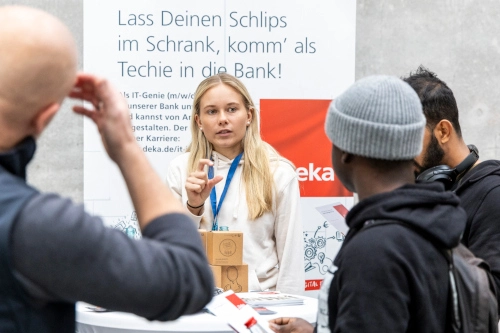
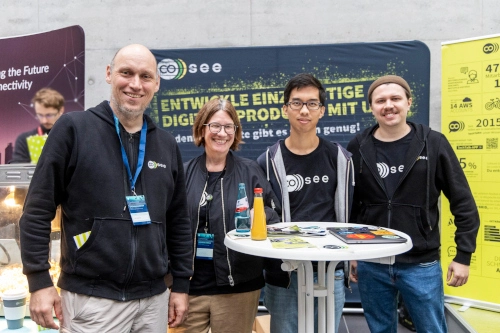
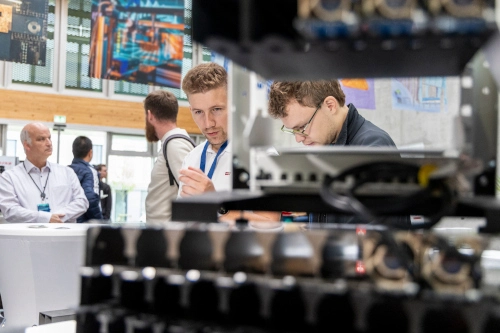
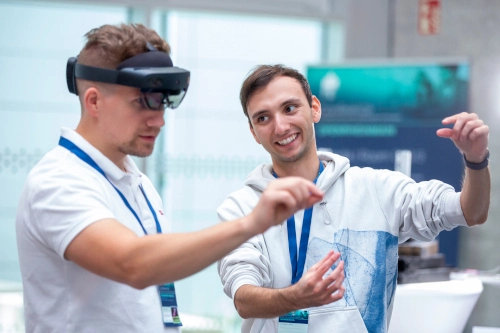
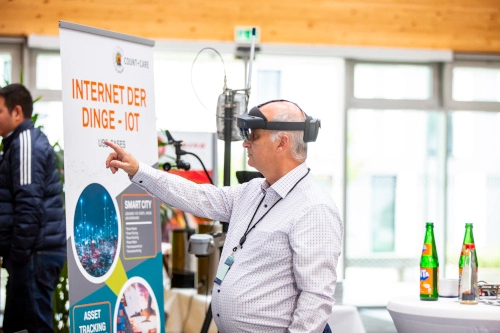
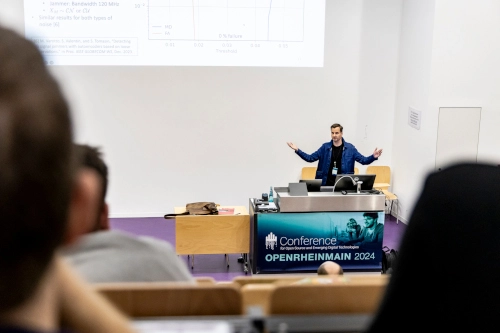
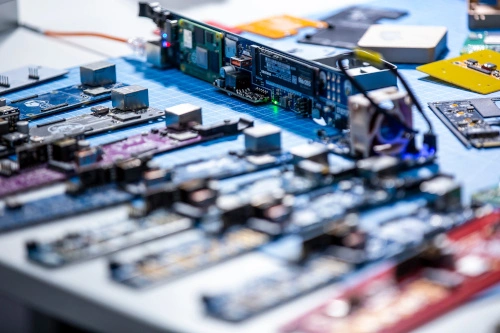
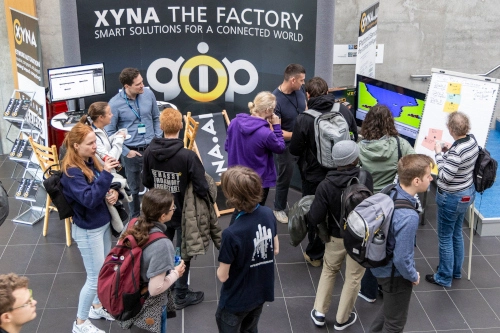
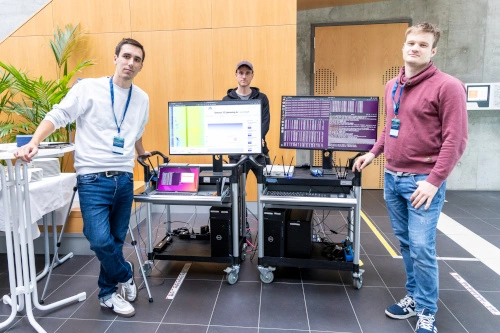
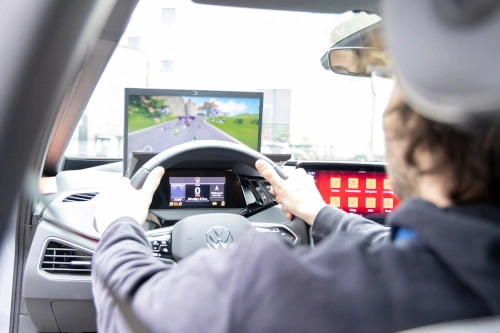
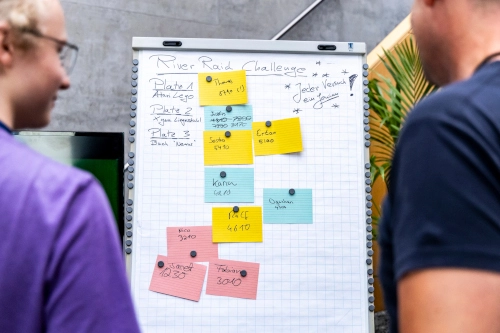
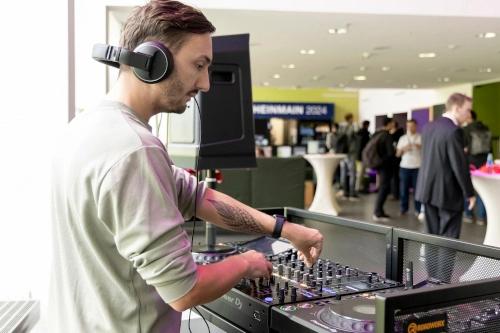
Here are some impressions of the OpenRheinMain 2024:
 |  |  |  |
 |  |  |  |
 |  |  |  |
 |  |  |  |
 |  |  |  |
Hochschule
Darmstadt
Fachbereich
Informatik
Schöfferstraße
3
64295
Darmstadt
Anschrift
Hochschule Darmstadt
University of Applied
Sciences
Haardtring
100
64295
Darmstadt
Tel.: +49.6151.533-5000
E-mail: info@h-da.de
Verantwortlich für den Inhalt
Für die angebotenen Inhalte sind die jeweiligen Personen verantwortlich.
Freistellungserklärung
Die Angaben wurden nach bestem Wissen erstellt, Fehler können jedoch nicht mit letzter Sicherheit ausgeschlossen werden. Rechtlich verbindlich sind ausschließlich die Festlegungen in den einschlägigen Rechtsgrundlagen (Gesetze, Verordnungen, Satzungen).
Für die Verarbeitung personenbezogener Daten im Rahmen unseres Angebots gilt die Datenschutzerklärung der Hochschule Darmstadt